Casa Olivo
Tuscany, Italy
Private Residence
2016
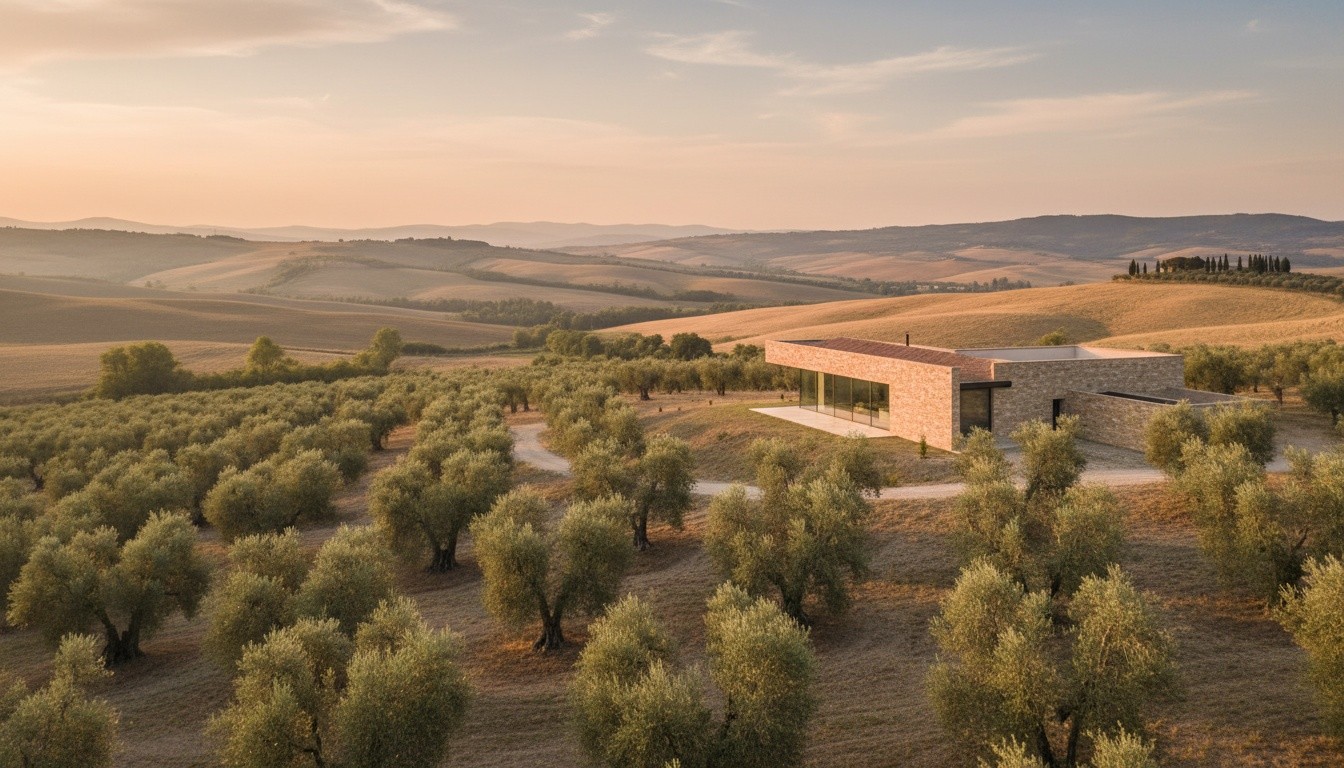
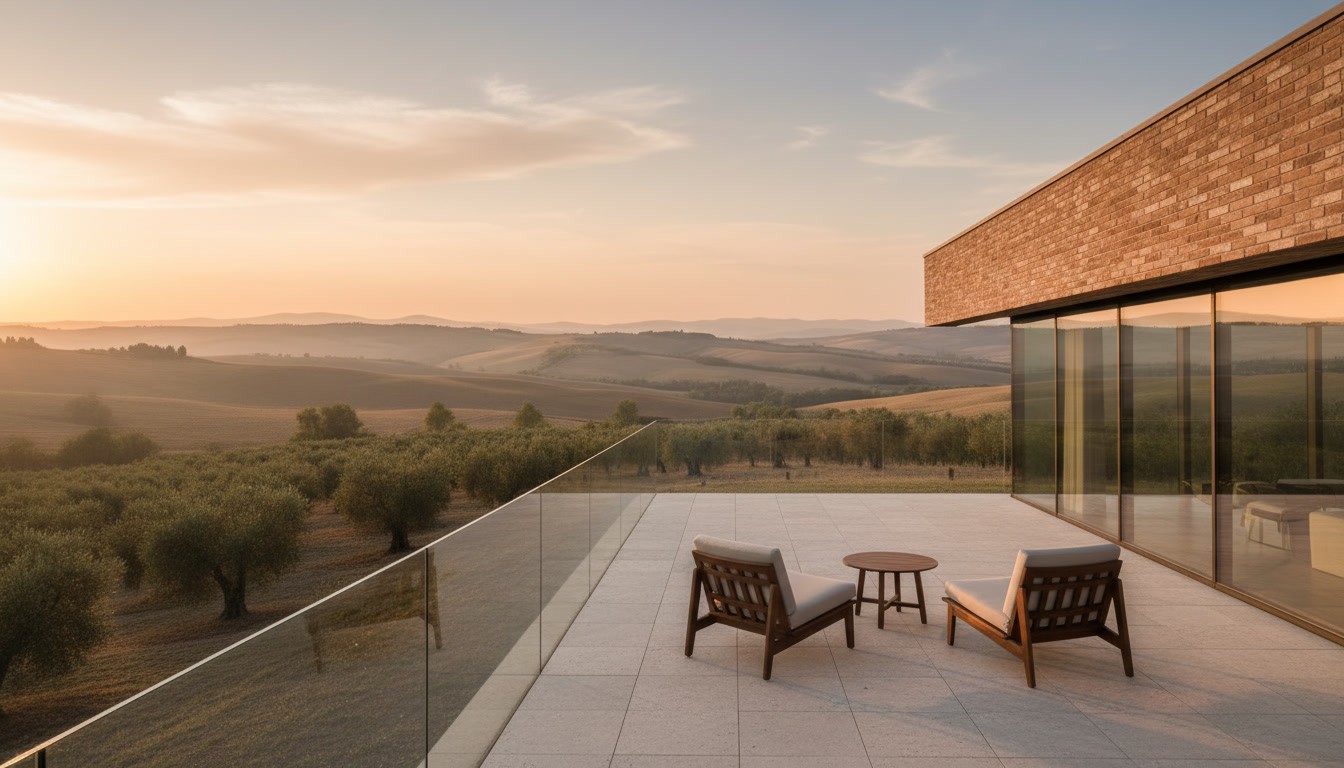
Casa Olivo is situated within the rolling agricultural landscape of Tuscany, surrounded by olive groves and gently sloping terrain. The project reinterprets the traditional farmhouse typology through a contemporary architectural approach that maintains a strong connection to the land. Rather than dominating its setting, the house follows the natural contours of the site, forming a sequence of terraces that extend living spaces outward. The building acts as both a private retreat and an integrated element within the cultivated landscape, reinforcing a sense of continuity between architecture and nature.
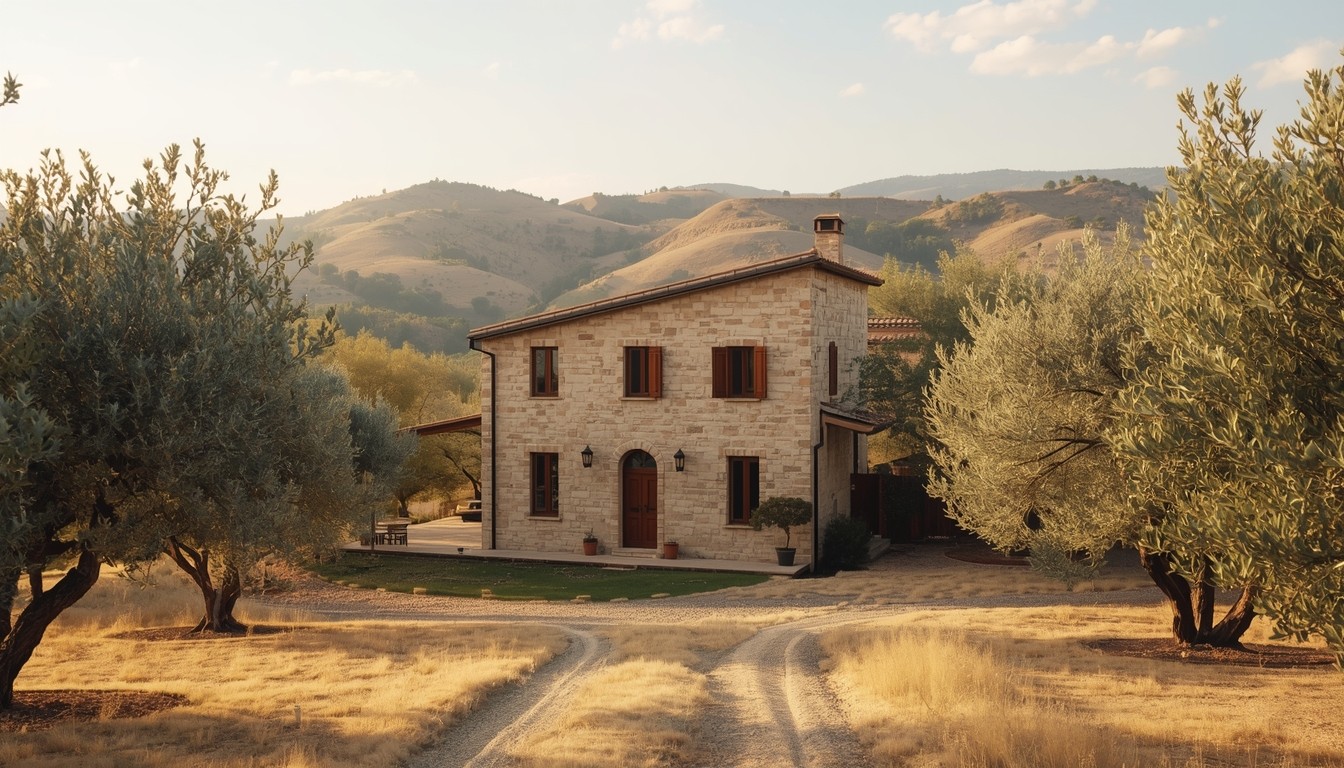
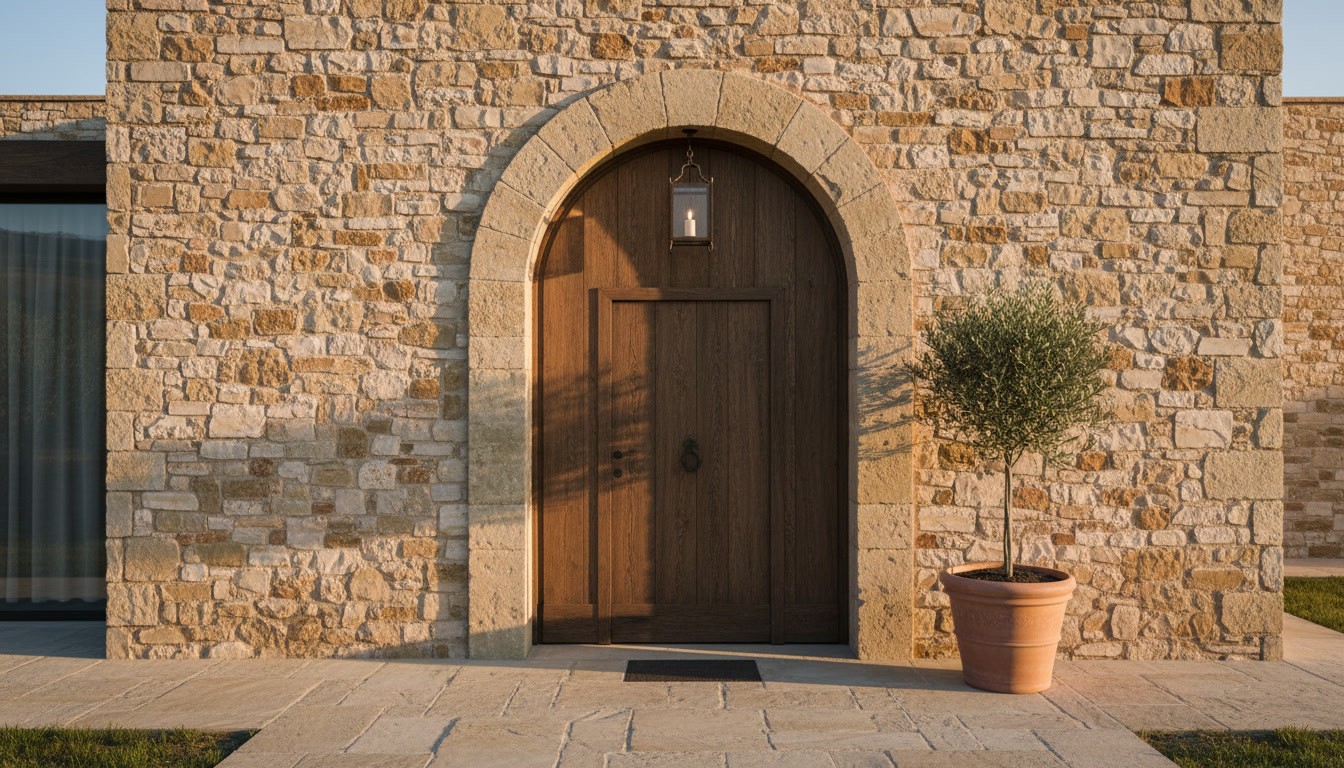
The concept is rooted in the reinterpretation of vernacular architecture, translating familiar rural elements into a refined spatial language. Thick stone walls define enclosed volumes and provide thermal stability, while lighter structures such as pergolas and shaded loggias mediate between interior and exterior. The design focuses on gradual transitions rather than abrupt boundaries, allowing spaces to flow into one another. This layered approach creates a balance between protection and openness, reflecting both historical precedents and contemporary living patterns.
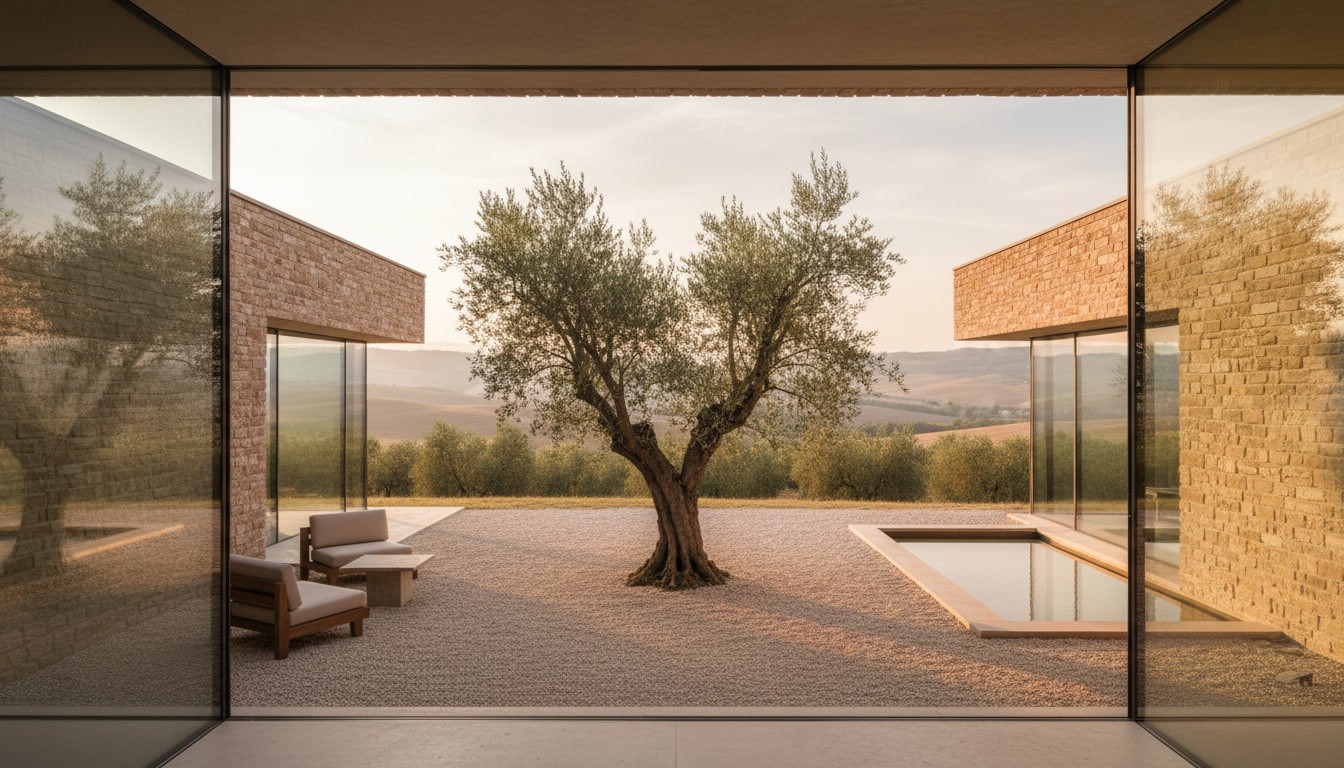
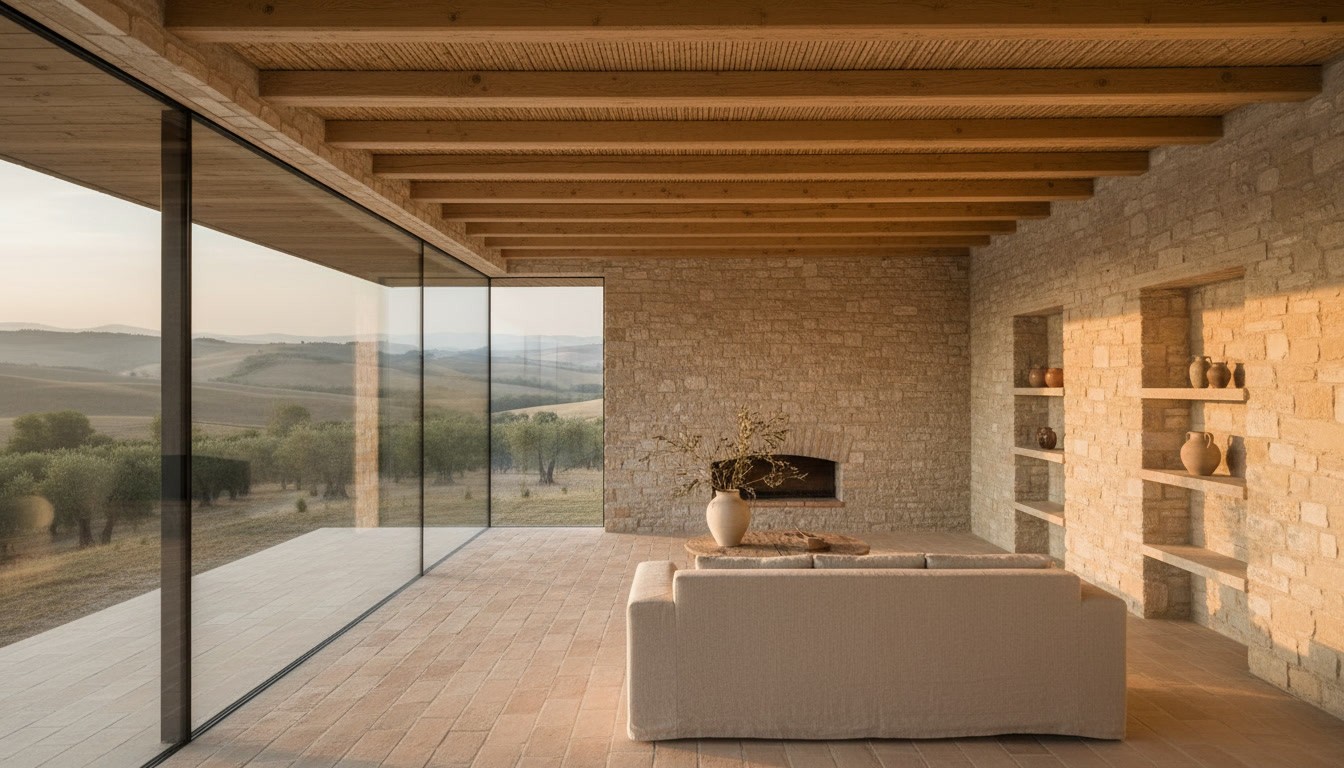
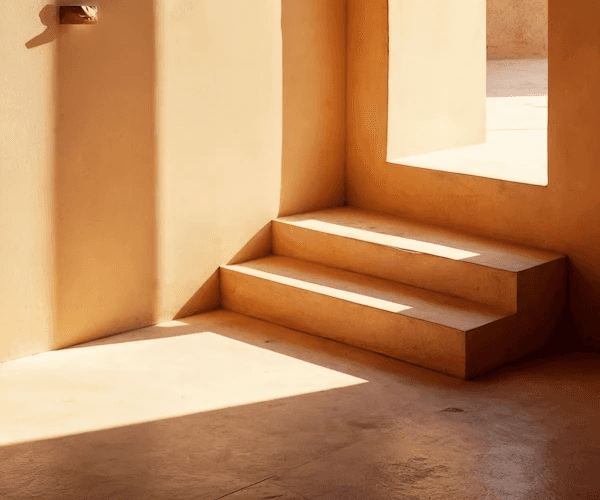
The interior is organized around a central living space that opens directly onto the surrounding landscape, establishing a continuous relationship between inside and outside. Private rooms are positioned deeper within the structure, offering shade and a sense of retreat. Movement through the house is defined by a sequence of thresholds, where light, material, and scale subtly shift. Outdoor terraces function as extensions of interior spaces, supporting seasonal living and creating a dynamic spatial experience that evolves throughout the day.
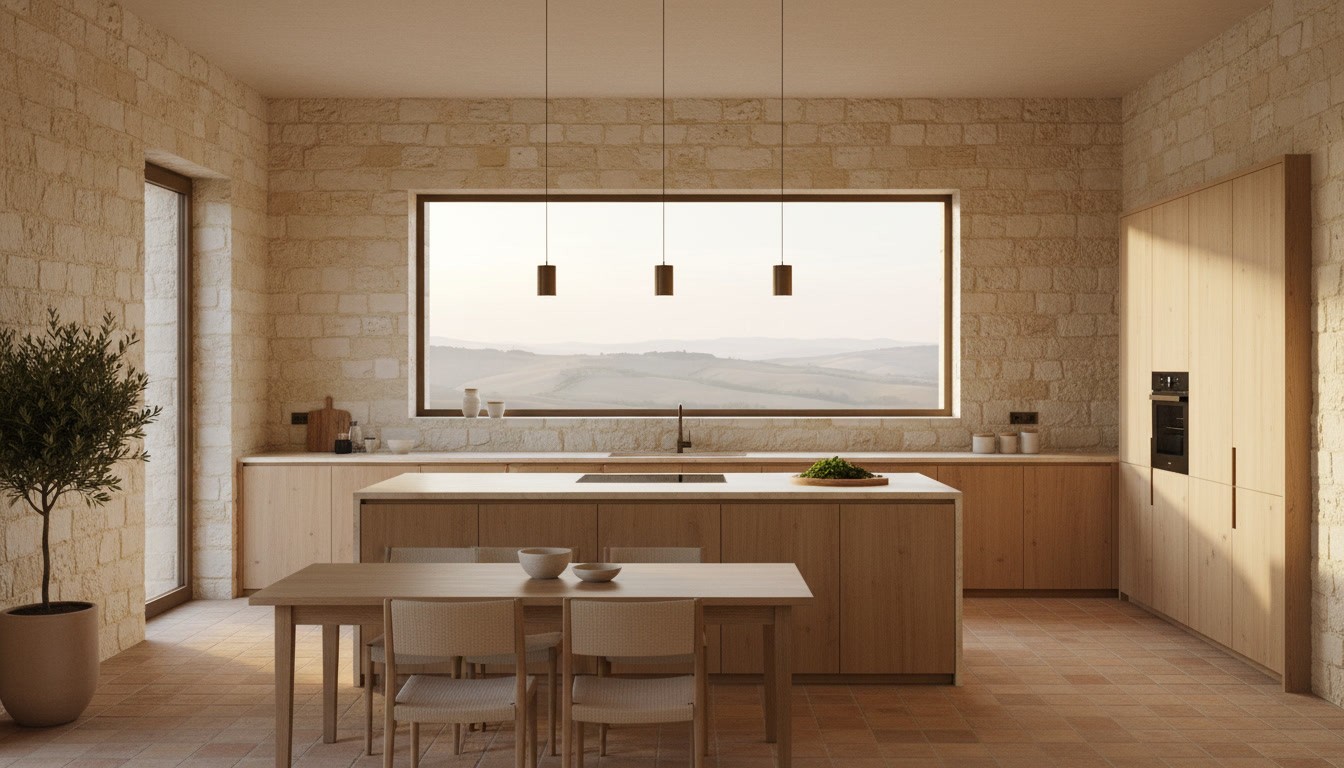
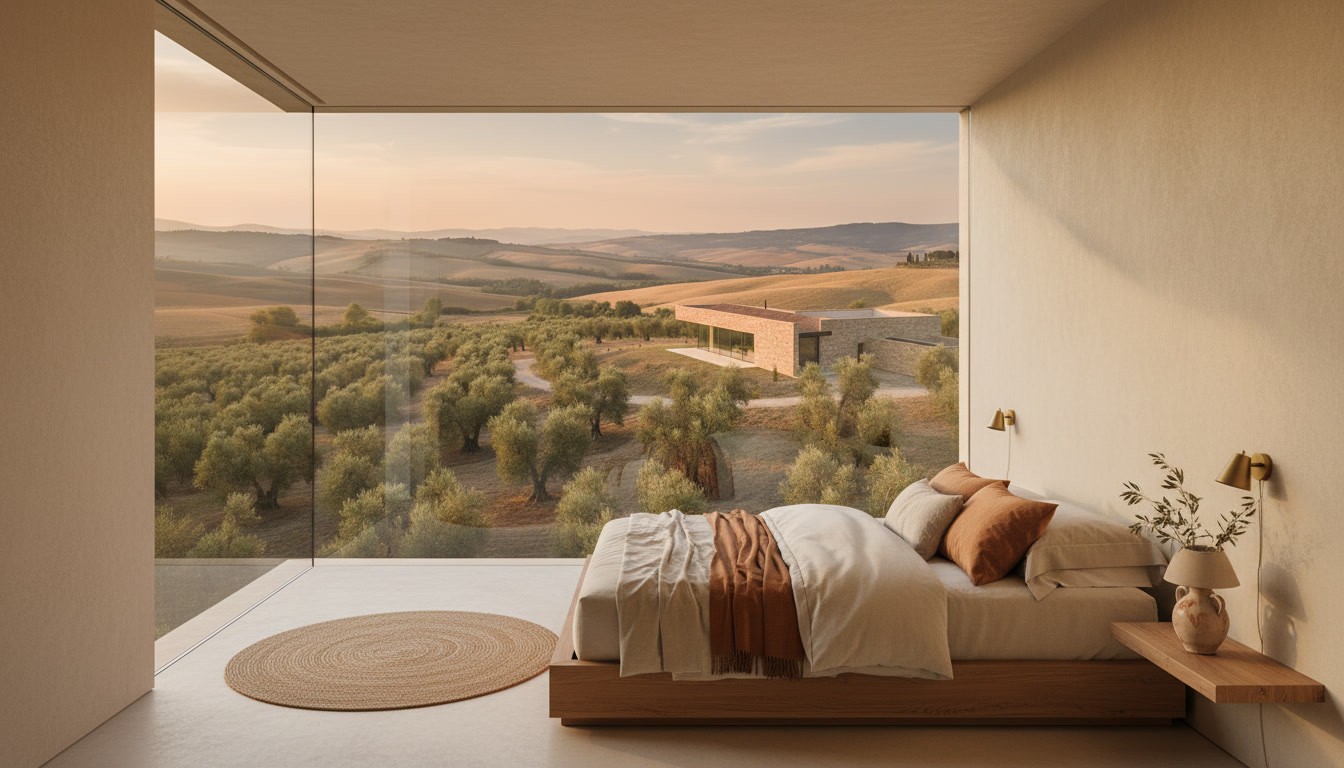
Materiality plays a central role in grounding the project within its context. Locally sourced stone forms the primary structure, complemented by timber beams, terracotta surfaces, and natural plaster finishes. Interiors are intentionally restrained, allowing textures and natural tones to define the atmosphere. Detailing is robust yet precise, reflecting traditional craftsmanship while maintaining a contemporary clarity. Materials are selected for their ability to age gracefully, reinforcing the building’s long-term integration into the landscape.
The house incorporates passive environmental strategies suited to the Mediterranean climate, including natural cross-ventilation, deep shading elements, and thermal mass. Rainwater collection and landscape integration further reduce environmental impact. By relying on local materials and construction methods, the project minimizes transportation and supports regional craftsmanship. Casa Olivo is designed as a long-lasting structure that evolves over time, strengthening its relationship with both the environment and local cultural traditions.
Explore more projects